Chronic Low Back Pain Physio Newcastle
Reduce persistent back pain, move with confidence, and get back to life
Living with ongoing back pain can be frustrating, exhausting, and limiting. It can affect your work, sleep, exercise, mood, confidence, family life, and ability to do the things you enjoy.
At Fitness Physio Newcastle, we help people with chronic and persistent low back pain reduce symptoms, improve movement, build strength, and return to work, sport, gym, and daily activities with more confidence.
If your back pain has lasted for months, keeps flaring up, or has not improved with previous treatment, we can help you understand what is contributing to your pain and create a clear plan to move forward.
Book your chronic back pain physio appointment today.
A different approach for back pain that keeps coming back
Many people with chronic low back pain have already tried rest, medication, massage, exercises, scans, injections, or other treatments — but still feel stuck.
You may be wondering:
- Why is my back pain still there?
- Is something damaged?
- Why does it keep flaring up?
- Is it safe to bend, lift, exercise, or work?
- Do I need another scan?
- What treatment will actually help me long term?
- How do I get back to normal life without fear of making it worse?
At Fitness Physio Newcastle, we focus on giving you answers, reassurance, symptom relief, and a practical plan that is specific to your pain, your lifestyle, and your goals.
Hands-on treatment to help settle symptoms
When your back is sore, tight, guarded, or sensitive, you often need relief before you can properly exercise or rebuild confidence.
Our physiotherapists use hands-on treatment to help reduce pain, ease muscle tension, improve movement, and make it easier to start your rehabilitation.
Treatment may include:
- Joint mobilisation
- Soft tissue massage
- Muscle release techniques
- Dry needling where appropriate
- Gentle movement restoration
- Advice on comfortable sitting, standing, sleeping, and lifting positions
- Strategies to help calm flare-ups
Hands-on treatment can be helpful for short-term symptom relief, especially when it is combined with exercise, education, and a clear long-term plan. NICE guidance supports manual therapy for low back pain when it is used as part of a package that includes exercise, with or without psychological support.
Long-term back pain needs more than short-term relief
Reducing pain is important, but chronic back pain often needs a broader approach than simply treating one painful area.
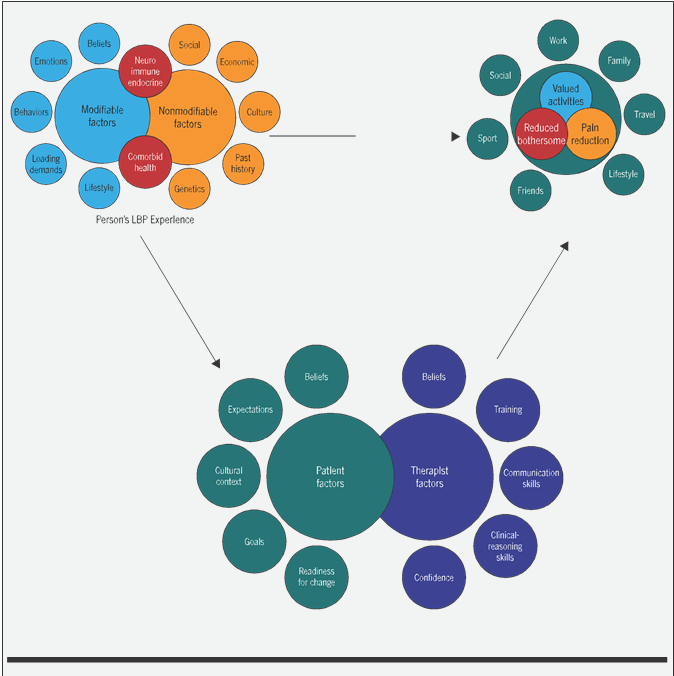
Persistent back pain can be influenced by a combination of factors, including:
- Back sensitivity
- Muscle guarding
- Reduced strength or conditioning
- Fear of movement
- Stress and tension
- Poor sleep
- Workload or training load
- Flare-up patterns
- Previous pain experiences
- Confidence with bending, lifting, sitting, and exercise
This does not mean your pain is “all in your head.” It means chronic back pain is real, but it is often influenced by more than one structure, scan finding, or single injury.
Our job is to identify the factors that matter most for you and help you build a plan that improves your movement, strength, confidence, and quality of life.
Cognitive Functional Therapy informed back pain care
Our clinic uses a Cognitive Functional Therapy informed approach for persistent low back pain.
This approach looks at the full picture of your pain, including how your back moves, how your body responds to pain, what activities trigger symptoms, how confident you feel with movement, and what lifestyle factors may be influencing your recovery.
A large Australian trial published in The Lancet described Cognitive Functional Therapy as an individualised approach for chronic disabling low back pain that targets pain-related thoughts, emotions, behaviours, movement patterns, and activity limitation. In that trial, CFT was more effective than usual care for activity limitation at 13 weeks, with similar effects at 52 weeks.
At Fitness Physio Newcastle, we use this style of care to help you:
- Understand your pain
- Reduce fear around movement
- Learn how to calm flare-ups
- Improve strength and function
- Return gradually to meaningful activities
- Build confidence bending, lifting, sitting, working, and exercising
Do scans explain chronic back pain?
Scans such as X-rays, CTs, and MRIs can be useful in some situations, but they do not always explain why pain is persisting.
Many people are told they have:
- Disc bulges
- Disc degeneration
- Arthritis
- Facet joint changes
- Scoliosis
- “Wear and tear”
- A slipped disc
- A weak core
- Poor posture
These findings may be relevant for some people, but they do not always match pain levels or function.
Your physiotherapist will assess your symptoms, movement, strength, history, lifestyle, and goals to help determine what is contributing to your pain and what treatment approach is most appropriate. NICE guidance advises that imaging is not routinely needed in non-specialist settings for low back pain unless the result is likely to change management.
What to expect at your first appointment
Your first appointment is designed to give you clarity, relief, and a plan.
Your physiotherapist may:
- Listen to your full back pain history
- Discuss your work, sport, exercise, sleep, lifestyle, and goals
- Review any scans or previous diagnoses
- Assess your back, hips, strength, movement, and functional tasks
- Identify what may be contributing to your ongoing pain
- Provide hands-on treatment to help reduce symptoms
- Teach you practical strategies for managing flare-ups
- Start a tailored exercise and rehabilitation plan
- Map out a pathway back to work, gym, sport, or daily activities
You will leave with a better understanding of your back pain and a plan for what to do next.
What your treatment plan may include
Your chronic back pain treatment plan may include:
- Hands-on physiotherapy for symptom relief
- Back, hip, and trunk strengthening
- Movement retraining
- Graded bending and lifting practice
- Walking or activity progression
- Gym-based rehabilitation
- Return-to-work planning
- Return-to-sport or return-to-training progressions
- Flare-up management strategies
- Sleep, stress, and lifestyle advice where relevant
- Education to help reduce fear and improve confidence
The World Health Organization’s guideline for chronic primary low back pain focuses on evidence-based, non-surgical care that can be delivered in primary and community settings. NICE also recommends tailored self-management advice, encouragement to continue normal activities, exercise, and more complex support for people at higher risk of poor outcomes.
Chronic back pain treatment for real life
We help people who are struggling with:
- Sitting at work
- Standing for long periods
- Bending and lifting
- Manual work
- Driving
- Sleeping comfortably
- Gym training
- Running
- Golf
- Surfing
- Sport
- Parenting and lifting children
- Repeated back pain flare-ups
- Fear of movement or reinjury
Your treatment plan is built around the activities you need and want to get back to.
Why choose Fitness Physio Newcastle?
Hands-on care for symptom relief
We use manual therapy, soft tissue techniques, dry needling where appropriate, and movement-based treatment to help settle symptoms and restore movement.
Evidence-informed chronic back pain treatment
We use a modern approach to persistent back pain that considers movement, strength, confidence, lifestyle, loading, and pain sensitivity.
Cognitive Functional Therapy informed care
We look beyond one scan finding or diagnosis and help address the factors that may be keeping your pain going.
Fully equipped rehabilitation gym
Our onsite gym allows us to progress your recovery from early symptom relief through to strength, lifting, conditioning, work, sport, and gym-based rehabilitation.
Personalised treatment plans
Your pain history, lifestyle, work demands, goals, and activity level are unique. Your treatment plan should be too.
Focused on long-term confidence
We help you understand your pain, reduce flare-ups, build strength, and return to the activities that matter most.
Book your chronic back pain physio appointment
You do not have to keep putting up with persistent back pain or waiting for it to settle on its own.
If chronic low back pain is affecting your work, sleep, sport, training, or daily life, our Newcastle physiotherapists can help you take the next step.
Book your appointment today and start your personalised chronic back pain treatment plan at Fitness Physio Newcastle.
FAQ
Can physiotherapy help chronic low back pain?
Yes, physiotherapy can help many people with chronic low back pain by reducing symptoms, improving movement, building strength, and helping them return to work, sport, gym, and daily activities with more confidence.
Why has my back pain lasted so long?
Back pain can persist when the back and nervous system become sensitive, or when factors such as reduced strength, guarded movement, stress, poor sleep, workload, fear of movement, or repeated flare-ups keep the pain cycle going.
Is chronic back pain always caused by damage?
Not always. Chronic back pain does not always mean ongoing damage. Pain can continue even after an initial injury has settled, especially when the area remains sensitive or when movement, lifestyle, and confidence factors are contributing.
Can hands-on treatment help chronic back pain?
Hands-on physiotherapy may help reduce pain, muscle tightness, stiffness, and guarding. It is often most helpful when combined with exercise, movement retraining, education, and a long-term rehabilitation plan.
What is Cognitive Functional Therapy?
Cognitive Functional Therapy is an individualised approach to persistent back pain that considers movement, pain beliefs, emotions, behaviours, lifestyle, and activity patterns. The goal is to help people understand their pain, move with more confidence, and return to meaningful activities.
Do I need an MRI for chronic back pain?
Not always. Scans can be useful in some cases, but many people with back pain do not need imaging straight away. Your physiotherapist can assess your symptoms and guide you on whether further medical review or imaging may be appropriate.
Is it safe to exercise with chronic back pain?
In many cases, yes. The key is choosing the right starting point and progressing gradually. Your physiotherapist can guide you on which exercises are suitable and how to build confidence safely.
How many sessions will I need?
This depends on how long you have had pain, your symptoms, your goals, your activity level, and any contributing factors. After your first assessment, your physiotherapist can give you a clearer treatment plan.